Correct the record before building authority
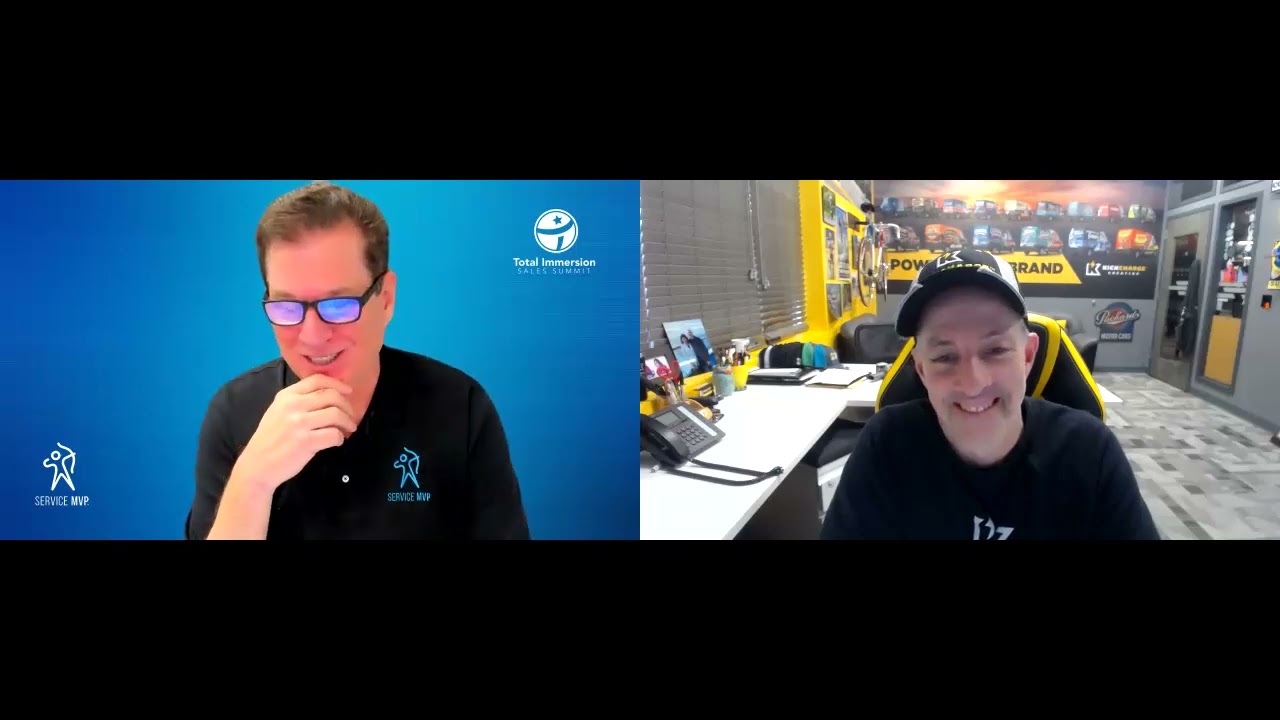
The YouTube source title says “Tim Hook,” but the opening introduces Tim Brown and immediately treats “Tim Hook” as a joke about Hook Agency brand impressions. Hook Agency's current profile independently names Tim Brown as owner and CEO, while its company history connects his earlier Tim B Design work to Hook Agency. The corrected identity belongs in the headline, guest archive, schema, alt text, and source trail.
This small correction illustrates the larger proof standard. A polished label can still be wrong. Before publishing a customer name, company, quote, date, result, or role, trace it to the original record and a second identifying fact. If sources disagree, preserve the conflict and use the narrowest supported statement instead of allowing a convenient metadata field to become public biography.
Mine reviews for the language customers repeat
Tim recommends reading a recent group of reviews rather than beginning with an internal list of strengths. Code the specific problem the customer described, the behavior they noticed, the evidence they mention, the emotion before and after, and the words they use for relief. Repeated language can reveal that speed, explanation, cleanliness, communication, or another detail matters more than the adjective the company chose for itself.
Keep the source attached to every phrase. Record the platform, date, URL or export, reviewer permission when needed, service context, and exact wording. Do not rewrite a customer's statement into a stronger result. A review theme suggests where to investigate; it does not prove that every customer has the same experience or that the company will always reproduce it.
Tim's starting question is specific:
“Go back through your last 30 reviews. What are three things that people are saying that are different about your company?”
Tim Brown, episode timestamp 06:39
Convert a pattern into a defensible promise
Generic claims such as “customer focused” fail Tim's differentiation test because nearly every competent company can say them. A defensible promise is narrow enough to inspect: who answers after hours, how a service window is communicated, what documentation arrives after the job, or who reviews an unresolved complaint. The promise matters only when the operation has a written way to keep it.
For each candidate, name the trigger, responsible role, deadline, evidence, exception path, and customer remedy. Check call logs, arrival records, job photos, closeout documents, callbacks, and complaint handling. If the business cannot verify the promise today, treat it as an improvement project rather than copy. This extends building a recognizable home-service brand from visual identity into operating proof.
Tim condenses the test into one line:
“What can your competitor not say and then boil it down in a way that you can repeat often?”
Tim Brown, episode timestamp 17:53
Capture testimonials without scripting the customer
Tim suggests placing a strong customer video on the website. The trustworthy version starts with a real customer and a real experience. Obtain permission for recording and publication, explain where the video may appear, ask open questions, and let the customer use their own words. Keep the unedited source and the release so a short cut can be checked against its context.
Do not condition payment, a discount, or another benefit on positive sentiment. Disclose material relationships and incentives where required. Current FTC guidance distinguishes reviews from testimonials and addresses fake experiences, insider relationships, conditioned incentives, and suppression. The rules are not a production checklist or legal safe harbor, so a regulated campaign deserves qualified review.
Build a case study a buyer can inspect
A testimonial says what a customer experienced; a case study shows how the evidence fits together. Begin with the property or business context that the customer permits you to disclose, the problem as observed, constraints, options considered, selected scope, work completed, and verification. Use dated photos, measurements, documents, or customer statements only when their provenance is preserved.
Outcome numbers need a baseline, time period, method, and limitations. If those are missing, publish the process and omit the result. Do not imply that a featured experience is typical, current, or guaranteed. The proof discipline in building a roofing brand on evidence applies across trades: a claim is strongest when a skeptical buyer can see exactly what supports it.
Connect customer proof to buyer questions
Proof becomes useful when it answers a decision, not when it sits in an undifferentiated carousel. Match each review, clip, case study, or process image to a buyer question: What happens after I call? Who enters my home? How will options be explained? What affects price? How is completion checked? What happens if something is not right?
Place the strongest relevant evidence beside the answer, with a link to the fuller source when possible. Avoid using a roof case to substantiate plumbing, a commercial result for a residential promise, or an old service policy as if it remains current. Answering buyer questions before the sales call works because education and proof arrive together.
Turn proof themes into a publishing rhythm
Tim proposes recurring series built around the few differentiators found in reviews. The title of the series is less important than the operating loop: capture one real example, verify it, obtain permission, explain the problem without overstating it, show the resolution, link to the canonical page, and save the source record. A recurring format reduces the temptation to invent a new claim every week.
Assign the loop to named roles. A technician flags the moment; a manager verifies technical accuracy and privacy; an editor checks the proof, disclosures, and context; a publisher adds the internal links and source trail. Review the series quarterly against customer feedback and operations. Stop repeating a promise when the process, staffing, offer, or evidence no longer supports it.
Show the problem without fabricating fear
Near the end, the conversation recommends zooming in on a problem, then drifts into the idea of exaggerating where neglect could lead. That is the line not to cross. A cracked part, failed ignition, stain, loose shingle, or damaged surface must be the real condition recorded on the real job. Do not stage a before image, imply a hazard without qualified support, or present a worst case as the likely outcome.
Use literal language: what was observed, what test was performed, what remained uncertain, which option the customer selected, and how the completed work was checked. Protect addresses and personal data, secure permission, and keep unsafe procedures out of do-it-yourself framing. Clear evidence differentiates a company; fear that cannot survive inspection damages the trust the proof was meant to build.
From the episode
Frequently asked questions
How can customer reviews reveal a contractor's real differentiation?
Read a recent set of authentic reviews and code the exact phrases customers repeat about the problem, service behavior, evidence, and relief. A repeated theme is a research lead, not automatic proof; verify that current operations can still deliver it before making it a promise.
What belongs in a trustworthy home-service case study?
Include the customer's situation, scope, constraints, evidence, options, work actually performed, verification method, and outcome the source can support. Preserve consent and disclosures, avoid presenting an exceptional result as typical, and never invent a quote or before image.
Can a contractor offer an incentive for a review or testimonial?
Applicable rules depend on the facts and jurisdiction. Current FTC guidance prohibits fake or false reviews and incentives conditioned on a particular sentiment, and it requires material connections to be handled clearly. Obtain legal guidance for a specific program rather than relying on a podcast summary.
Source trail
See the evidence behind this article
- Full Tim Brown episode
Primary video and complete public-caption source for the reviews, testimonials, referral relationships, specific promises, recurring series, and problem-to-resolution content discussion.
- Tim Brown profile at Hook Agency
Current first-party page confirming that the guest is Tim Brown and identifying him as Hook Agency owner and CEO. Case-study cards and outcomes on the page remain first-party promotion.
- Hook Agency company history
First-party history connecting Tim Brown's Tim B Design origin to Hook Agency and documenting its home-service focus; growth and performance language is not independent proof.
- FTC consumer reviews and testimonials Q&A
Current primary regulator guidance used for review, testimonial, incentive, insider, suppression, and material-connection guardrails; it states that context matters and the guidance is not a safe harbor.