Start with the buyer's real question
The central editorial move is to replace a broad topic with a question a homeowner would actually type, ask a dispatcher, or save for the technician. “Tell us about your plumbing company” invites a résumé. “When does a tankless water heater make sense?” invites a decision guide. The second prompt makes room for household needs, constraints, maintenance, installation conditions, and reasons the answer may differ. It also gives the interviewer something concrete to challenge or clarify.
Build the first topic list from call notes, estimate objections, technician debriefs, search queries, and customer-service conversations. Remove personal information before those notes enter an editorial system. Group near-duplicates, then choose one canonical wording that reflects the underlying decision. This is the same buyer-first discipline used when you answer questions before the sales call: the page should reduce uncertainty without pretending that general education replaces a qualified diagnosis.
The supporting 2023 Jim recording makes the same intent visible from another angle. At 03:15, the discussion describes a buyer researching the people invited into a home; at 08:56, it moves to short frequently asked questions. Those are recording-time observations, but they support a durable editorial choice: start with what the person needs to understand rather than with the company's claim to be different.
Turn one answer into a durable episode page
Jim describes placing short question-and-answer recordings on a client's site so a visitor can see the owner discuss the business. The durable part is not a particular player or directory named in 2023. It is the owned page that gives the recording context: an immediate answer, a transcript-grounded explanation, timestamp links, source notes, a truthful image, related reading, and a clear revision date. If a platform changes, the useful page still has an identity and a maintenance path.
Publish one page for one owned intent. A later upload that repeats the exact episode should attach to the existing page, not become a second article. A genuinely separate recording can deepen the same page when it answers the same search and reader need. This canonical consolidates two such supporting interviews plus one exact reupload. That decision protects readers from near-identical pages and gives editors one place to correct outdated examples or expand the answer.
“When someone goes to learn more about the company, they see me and the owner of the company talking about their business, and we answer frequently asked questions.”
Jim Klauck, episode timestamp 22:42
Use the interview to earn third-party context
An interviewer changes the burden of the conversation. Instead of asking the owner to announce that the company is wonderful, the host can pose the buyer's question, ask what evidence supports an answer, request a plain-language definition, and surface an exception. That does not make every statement independently verified. It does make the structure less dependent on unprompted self-praise and gives an editor clearer moments to check against licenses, manuals, manufacturer instructions, or current platform policies.
Prepare the host with a short evidence brief rather than a promotional script. Include the question, the intended reader, recording-time context, terms that need definition, claims that require attribution, prohibited private details, and one useful next action. Ask follow-ups such as “When would that not apply?” and “What would a homeowner need to confirm on site?” The interview then becomes a guided explanation, while the finished article carries the sources and guardrails that spoken conversation often leaves implicit.
“The best thing to do if you're going to do anything like that is just use that selfie video as an educational tool, but if you really want credibility and you really want to stand out from your competition, have someone else interview you.”
Jim Klauck, episode timestamp 27:20
Let employees make the service more legible
A separate 2023 Jim recording adds an important point: the owner need not be the only recognizable voice. The discussion at 08:14 considers how an employee's presence can help a listener recognize the person within the broader company brand. Used carefully, that can make real expertise visible and prevent every explanation from sounding as though it came from a faceless marketing department.
Participation should be voluntary, role-appropriate, and supported. Confirm who may discuss technical, safety, pricing, or policy topics; obtain necessary permission for name, image, and recording; and do not pressure an employee to disclose family, health, immigration, disciplinary, or customer information. Give contributors the final factual check without turning the piece into a string of approvals that strips away their voice. The goal is a truthful account of how the work is understood and performed, not a manufactured employee testimonial.
Move trust upstream with recognizable people
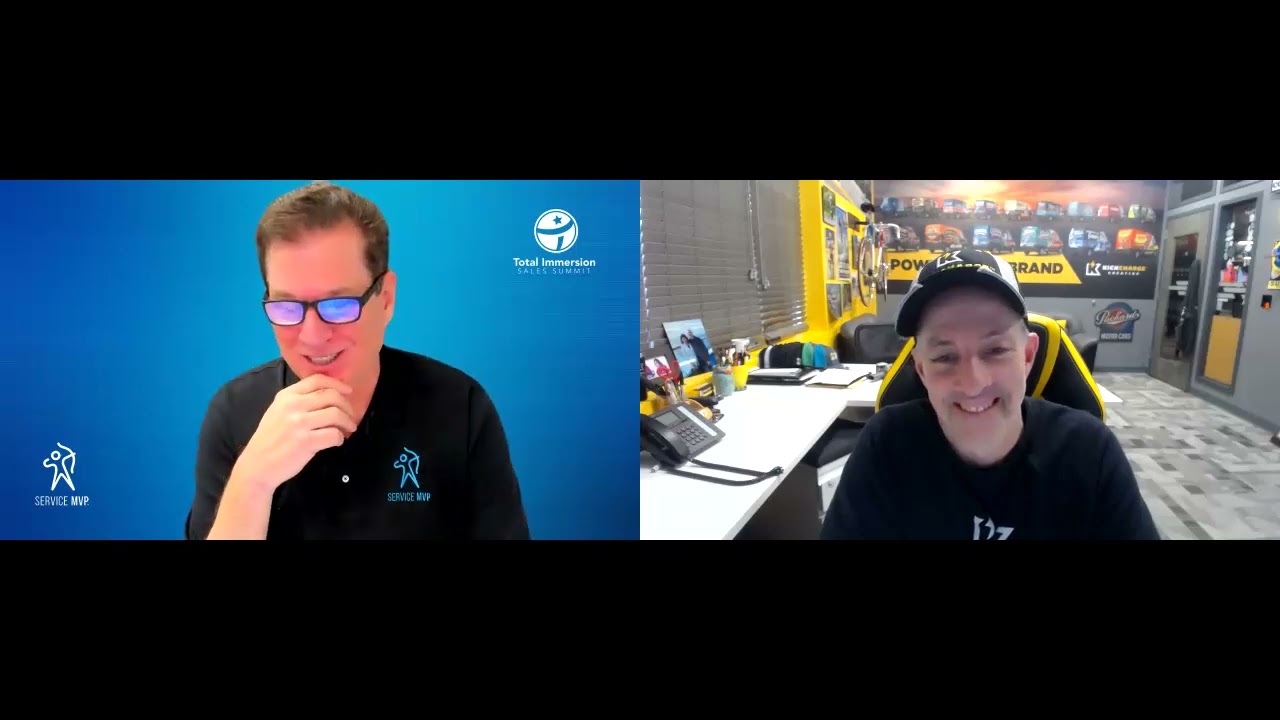
In the 2024 Cody Johnson recording, Jim frames the challenge as building a relationship before the prospect appears through a lead source. At 04:03, the conversation turns from search and lead channels to letting people encounter a real service professional through video, podcast, or radio. That is a useful design idea when kept separate from the speakers' unverified claims about what a channel will produce.
The practical test is recognition with substance. A recurring face is not enough if each appearance repeats an offer. Use the series to show how the team thinks: which questions change a recommendation, how a visit is prepared, what a customer should document, when a general answer stops being safe, and how the company handles an exception. Link that educational layer to a recognizable home-service brand whose promise the field team can actually deliver.
Connect good service to a responsible referral story
Cody's episode also adds a field-level view of continuity. At 08:07, he describes a customer relationship that may lead to a referral and a direct return contact. The useful lesson is not that one repair, podcast, or personal phone number will reliably create referrals. It is that the content promise and the service experience should meet: clear expectations, careful work, accessible follow-up, and an easy way to share an accurate resource when someone asks for help.
Create a referral asset that stands on its own. Link the relevant episode page, state the service area and limits, and avoid asking a customer to make claims they cannot verify. Obtain permission before publishing a person's story, and do not expose an address, invoice, equipment identifier, or private contact detail. Track referred inquiries only with proportionate consent and retention. A referral is earned trust between people, not a license to turn a customer relationship into unrestricted marketing data.
Date platform claims and preserve the source trail
The supporting recordings name search engines, podcast directories, social platforms, backlinks, audiences, and promotional results. Those are recording-time examples from 2023 and 2024. This article does not adopt them as current rules or independent proof. Platform distribution, indexing, visibility, and commercial terms can change; even a correctly uploaded episode may not be discovered. Keep each assertion attributed, add a checked date when current behavior matters, and link the official platform guidance used for publication decisions.
Preserve the complete public caption file, cleaned transcript, timestamp segments, public metadata, image source, and source-page snapshots beside the draft. Record exact reuploads separately from distinct enhancements. If a quotation cannot be found near its timestamp, remove or correct it. If a source later disappears, retain its hash and explain the limitation rather than inventing continuity. That source discipline makes the page auditable and supports diversified discovery without pretending every distribution endpoint is permanent.
Measure whether the library resolves uncertainty
A podcast library needs a review loop, not a vanity dashboard. For each page, define the buyer question and the behavior that would suggest the answer helped: use of a timestamp, progression to a related guide, a more specific scheduling question, fewer repeated explanations, or a qualified appointment with clearer expectations. Watch for the opposite signals too—rapid exits, repeated confusion, corrections from technicians, or calls from outside the stated service scope.
Review themes monthly and individual facts on the schedule their risk requires. Update a pricing, safety, legal, or platform statement when the controlling information changes. Merge pages that drift into the same intent, and attach reuploads to their owner. Use the companion guide to build a repeatable podcast content cadence for production, then use this page's authority test for editorial judgment: did the episode help a real person make a better-informed next decision?
From the episode
Frequently asked questions
How can a home-service podcast build authority?
Use each episode to answer a question a real buyer asks, let a capable interviewer draw out the contractor's experience, and keep the result on a canonical page the company controls. The recording supports that editorial process; it does not prove rankings, leads, credibility, or revenue for every company.
Should the owner record alone or be interviewed?
Both formats can educate. Jim's preference is an interview because a second person can ask the buyer's question, request clarification, and provide context without forcing the owner to praise the company directly. A short owner-recorded answer still works when it is specific, accurate, and useful.
Why are three Jim Klauck recordings on this page?
The main episode and two separate recordings with Jim address the same authority-building intent from different angles. The Cody Johnson recording adds relationship and referral context; the earlier Jim episode adds buyer-research, employee-voice, and FAQ examples. They are distinct sources consolidated here to avoid competing articles. A fourth video is an exact reupload of the main episode.
Source trail
See the evidence behind this article
- Podcast authority interview with Jim Klauck
Primary video and complete public-caption source for interview-led FAQ, site-library, and educational-video lessons.
- Cody Johnson and Jim Klauck on video-powered podcasts
Distinct supporting recording used for relationship, service-continuity, and referral context; performance claims remain attributed.
- Jim Klauck on standing out with podcasts
Distinct supporting recording used for buyer-research, employee-voice, and FAQ context; platform and backlink claims are dated to 2023.
- Jim Klauck radio host biography
Current first-party Check A Pro profile used to verify Jim Klauck's identity and radio and podcast work.
- About Check A Pro
Current first-party company page used for organization context, not as proof of episode outcomes.
- Garage Door Doctor episode page
First-party show page used to verify Cody Johnson's recording-time company identity.