Define the loads before choosing a generator
Delton Landry of A&A GenPro says square footage is not enough to size a standby generator. Two similar homes may have different air-conditioning equipment, medical devices, water systems, cooking loads, or expectations during an outage.
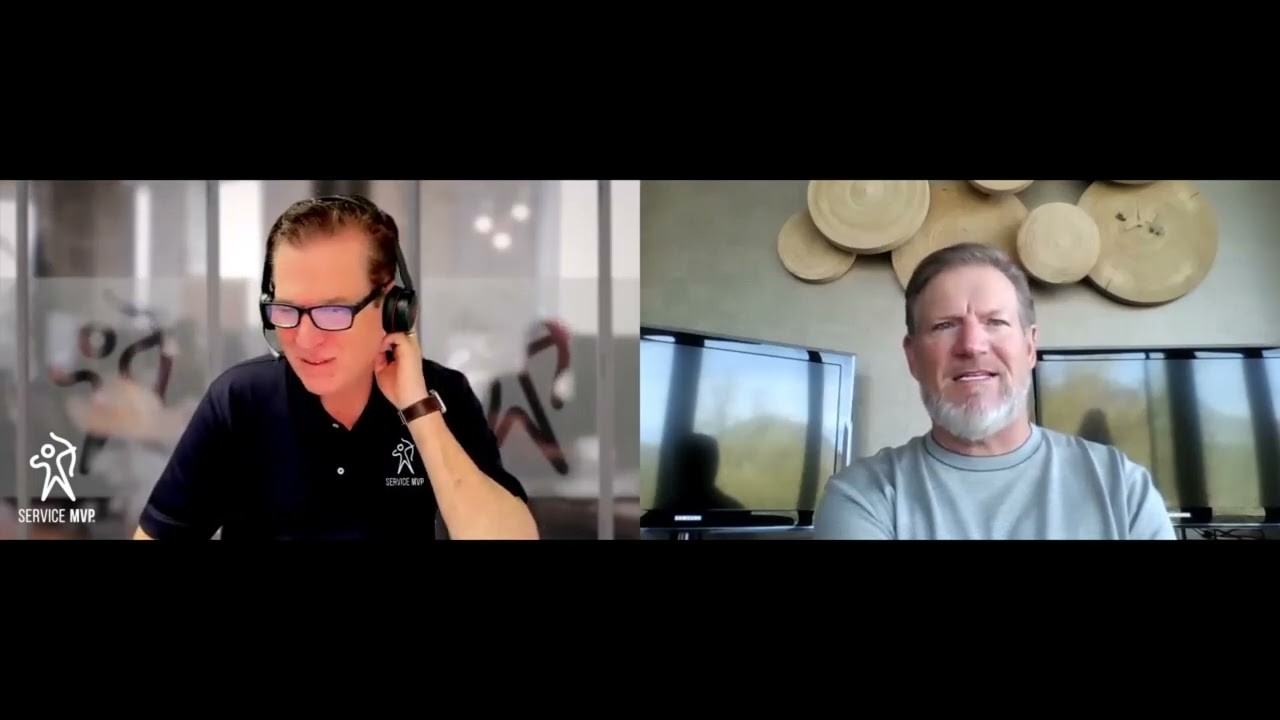
Start with the outcome: which equipment must operate, which loads can wait, and whether any device is medically or operationally critical. At 08:14 in the episode, Delton uses a caller's CPAP and air conditioner to show why the assessment has to begin with questions rather than a one-size chart. The FDA's disaster guidance for powered medical devices also says to confirm device compatibility and keep a backup plan; a generator is not the whole emergency plan.
Before comparing capacities, make sure everyone means the same equipment category. At 09:47, Jim separates a portable gasoline or small-cylinder product from the standby-system category under discussion; the segment's danger, reliability, and superiority claims are not adopted here. The conversation then frames the installation process as a homeowner question at 19:16 and says at 20:44 that natural-gas or propane routing varies by property. Use that sequence as an intake check: identify the product category, automatic-transfer scope, approved fuel route, and licensed trades before treating a size label as a complete design.
Inspect electrical, fuel, and placement constraints
A recommendation should follow an on-site assessment. Starting in the caption segment at 05:14, the conversation connects sizing and installation to understanding a home's electrical components. Delton describes checking the breaker panel, utility service, gas or other fuel source, gas and electric meters, and the possible equipment location. A fuel meter or line that cannot support the proposed load can change the scope and cost.
Placement also has to follow the equipment manufacturer's current clearances, applicable codes, utility rules, and local permitting requirements. This article cannot determine those requirements for a specific property. Use a properly licensed electrical contractor and any other trade required for the fuel connection.
The February A&A GenPro recording adds another property-assessment example. At 14:25, Andrew and Jim describe looking at the property before recommending a generator type or capacity. The segment's offer language is excluded; the useful point is narrower: ask the contractor to record the observed panel, fuel, access, location, and load constraints before making a recommendation.
Protect critical needs with a separate emergency plan
A generator should be one layer of a household plan, not the entire plan. If someone depends on a powered medical device, confirm the device's electrical requirements, the acceptable transfer delay, available battery backup, and what the household will do if the generator does not start.
The FDA's disaster guidance for powered medical devices recommends device-specific planning and backup supplies. That is why Delton's CPAP example belongs at the beginning of the assessment: the consequence of losing a load matters as much as the number of watts it draws.
Choose what the transfer system will power
The episode explains that an automatic standby system detects an outage, starts the generator, and transfers the planned loads after a short delay. The design can support broad whole-home coverage or prioritize selected circuits.
At 29:14, Jim and Delton use refrigeration and air conditioning as examples of priority loads while discussing a pool pump as something a homeowner might leave out. That choice affects generator capacity, transfer equipment, installation complexity, and fuel use, so it should be agreed before the contract is signed.
Put permits and inspections on the schedule
At 31:37, Delton describes a roughly 10-to-12-day example for his company's installation work, then immediately notes that timing varies with the municipality, permits, and inspections. Treat that as one provider's example, not a universal promise.
A professional proposal should separate equipment availability, site work, permit review, installation, inspection, utility or fuel coordination, and commissioning. Ask which party owns each step and which dates depend on an outside agency.
Two recording-time examples reinforce planning without promising a timeline. At 49:54, Andrew describes A&A GenPro's own permit, inspection, utility-coordination, and project-management workflow. At 17:24, Brian says homeowners should allow time for permits instead of waiting until storm season. Treat both as questions for the proposal—not universal code, approval, or timing rules—and verify the actual sequence with the licensed trades and local authority.
Plan testing, monitoring, and maintenance now
A standby generator is mechanical equipment that may sit quietly until the worst week to discover a problem. Delton discusses weekly self-tests, remote monitoring, and a six-month maintenance routine used by A&A GenPro. The correct interval for a particular unit must come from its current manual, operating hours, environment, warranty, and service provider.
The conversation also separates shorter residential backup needs from critical multi-day operation. Long outages can require planned checks or shutdowns, and some applications may justify liquid-cooled equipment. Discuss expected duty cycle before choosing a system rather than assuming every standby unit can carry every load continuously.
- List essential and optional circuits.
- Document electrical service, fuel capacity, and placement constraints.
- Confirm the transfer strategy and expected outage duty.
- Assign responsibility for permits, inspections, and utility coordination.
- Keep the commissioning, test, monitoring, and maintenance records.
Turn outage priorities into a load plan
A useful proposal shows which loads must run, which may cycle, and which stay off. In the August Suncoast segment, the discussion moves from a list of high-demand equipment to load management at 09:10. Another recording gives a concrete staged-load example at 07:40: equipment can be controlled so every large load is not demanded at once. That is a design option to evaluate, not proof that a smaller generator is adequate.
The April Suncoast recording returns to the same starting point at 16:51: decide what the household wants on backup power. A July A&A segment then shows the site walk moving from breakers and panel use to fuel, utility service, meters, and location at 17:48. Ask the licensed designer to document running load, motor-starting demand, allowed combinations, load-management logic, and reserve assumptions. The method is similar to right-sizing an HVAC system: measure the actual job instead of leaning on a single rule of thumb.
- Mark each circuit or appliance essential, preferred, or excluded.
- Identify loads that may start together and loads the controls will stage.
- Record the electrical, fuel, transfer, and control assumptions behind the proposed capacity.
- Have the licensed designer confirm the final calculation and approved equipment combination.
Plan the fuel supply for the outage you are preparing for
The right fuel plan starts with what is actually available at the property. Brian frames the natural-gas-versus-propane question that way at 01:35. Availability alone is not enough: the licensed installer, utility or fuel supplier, and equipment manufacturer still need to confirm pressure, capacity, regulator and meter requirements, approved piping, and the generator's rated output on the selected fuel.
For an extended outage, write down what could interrupt that supply and who responds. The May segment raises fuel depletion in its multi-day operating discussion at 18:28, then points back to the owner's manual during the extended-run discussion at 19:53. Those are planning prompts, not runtime promises. Use the current manufacturer data, the approved installation, the fuel supplier's capacity assessment, and a realistic resupply or interruption plan.
Make placement and exhaust safety property-specific
A neighbor's installation is not a placement template. At 08:04, the Suncoast discussion explicitly combines distance, openings, permits, and HOA rules. In the Houston episode, utilities, permitting restrictions, and elevation enter the site decision at 07:30. Flood exposure, service equipment, fuel routing, windows and vents, property lines, noise rules, access for maintenance, and manufacturer clearances can all change the approved location.
A June 2025 U.S. Consumer Product Safety Commission staff technical report on stationary-generator carbon-monoxide hazards analyzes home standby units as combustion equipment whose exhaust contains carbon monoxide. It is a CPSC staff technical report, not a statement of Commission-approved policy. Do not choose, install, move, enclose, or modify a generator from this article. A properly licensed electrical contractor and the qualified fuel trade should follow the exact current manufacturer instructions, adopted codes, utility rules, permit conditions, and authority-having-jurisdiction approval for the property.
At 18:29, the Suncoast discussion raises flood-zone constraints during planning for a property. That supports one bounded step: flag flood exposure during the assessment so the licensed designer and local authority can determine an approved location and scope. It does not support copying the provider's structural examples, assuming a universal elevation solution, or treating one recording as current code.
Coordinate early when a home is being built or remodeled
Several recordings raise backup power during the builder conversation: the A&A August segment at 01:32, Suncoast's first August segment near the opening at 01:32, and its second segment at 02:50. Their sales framing is not a reason to make a generator standard on every home. The durable lesson is to ask early, while electrical service, transfer equipment, fuel routing, equipment access, grading, clearances, permits, and the household's outage priorities can still be coordinated.
Ask the builder who owns the generator design, which licensed trades will perform the work, what the utility and fuel supplier must approve, and whether any transfer-ready provision has current manufacturer and AHJ support. Put those answers in the plans and contract. An allowance or a vague promise that the home is “generator ready” is not a substitute for an approved property-specific design.
Require a commissioning and document handoff
The June Suncoast recording's provider-specific sequence ends with customer education and startup at 20:09. In the Houston episode, Andrew describes permit, utility-locate, HOA, installation, and after-install service responsibilities at 29:49. Neither workflow is universal. Use them to test a proposal: it should name who owns design, permits, inspections, electrical work, fuel work, startup, homeowner instruction, and unresolved corrections.
At closeout, collect the approved permit and inspection records, equipment model and serial numbers, current manuals, transfer and load-management settings, fuel-system documentation, commissioning results, warranty registration, monitoring ownership, and service contacts. The in-home proposal guide is useful here: compare scope and assumptions instead of only the headline equipment size or price.
- Approved design, permit, and final inspection records
- Generator, transfer equipment, and load-management model and serial numbers
- Commissioning results and the agreed backed-up or managed loads
- Current manuals, warranty registration, and owner training record
- Monitoring account ownership, alert recipients, service contact, and escalation path
Define the test, alert, and service response before an outage
Monitoring answers only one question: did the system report a condition? In Suncoast's second August segment, exercise testing and monitoring are connected to the maintenance plan at 23:10. The June recording explains at 23:27 that mechanical equipment can fail even when monitored. Ask who receives each alert, what the alert can and cannot detect, who is authorized to respond, and what response terms are actually in the service agreement.
Monitoring does not replace inspection, maintenance, fuel planning, CO alarms, or an emergency plan. Andrew's maintenance answer at 41:59 mentions periodic checks, but the correct tasks and intervals belong to the current manual, operating history, environment, fuel system, warranty terms, and qualified service provider. Connected data should support—not replace—professional judgment, the same principle used in connected HVAC diagnostics.
Two recordings draw a useful line between visibility and upkeep. At 17:37, Andrew describes monitoring equipment that can surface selected alarms or alerts. At 07:25, Brian says monitoring does not remove routine maintenance for mechanical equipment. Ask the proposal to identify what the system reports, who receives it, and what service follows; let the current manual and qualified provider control maintenance tasks and intervals.
A generator proposal should name who owns the system after startup. The August Action Generator episode raises serviceability at 19:27, while the July episode connects installation, training, repair, and warranty questions at 03:29. Ask who may service the exact equipment, how current qualifications and parts access are verified, and how the written warranty path works. Do not assume the installer, monitor, and repair provider are the same party.
Keep the recommendation property-specific. One episode starts its on-site assessment at 28:43; the other returns to location and capacity at 34:57 and the existing electrical service at 35:10. Record the intended loads, panel and service, transfer scope, meter and routing constraints, fuel, location, and current approvals. Service amperage alone is not a generator-size rule.
Write testing and response as separate commitments. The August recording distinguishes maintenance scope at 30:51, battery load testing at 31:21, monitoring ownership at 33:03, and a weekly exercise from a loaded transfer test at 35:14. The current manual and qualified provider control tasks and intervals; the agreement should identify who records each result and who responds to an alert or failed test.
From the episode
Frequently asked questions
Can generator size be chosen from home square footage alone?
No. Delton says the installer should identify the loads the household needs during an outage, along with starting demands, electrical capacity, fuel supply, and the transfer strategy. Similar-size homes can need different systems.
Does a standby generator power every circuit?
It can be designed for broad coverage or for selected loads. The episode discusses prioritizing essentials such as refrigeration, cooling, or medical equipment while leaving nonessential loads off. The final design belongs with a licensed professional.
How often does a standby generator need maintenance?
The episode describes weekly self-testing, remote monitoring, and a six-month service pattern used by A&A GenPro. Manufacturer instructions, operating hours, environment, fuel, and local service requirements should control the actual schedule.
Is natural gas always better than propane for a standby generator?
No universal answer is safe. Availability, utility and fuel-supplier capacity, approved piping and regulators, stored-fuel planning, the generator's current ratings, and expected outage duty all matter. The licensed designer should document the property-specific fuel assumptions.
What should a standby-generator proposal document?
It should identify the backed-up and managed loads, electrical and fuel assumptions, transfer and control design, equipment location, licensed trades, permits and inspections, commissioning, owner training, monitoring, maintenance, and responsibility for each step.
Does remote monitoring replace generator maintenance?
No. Monitoring may report selected conditions, but it does not replace current manufacturer procedures, inspections, fuel planning, periodic service, CO precautions, or a household emergency plan. Confirm who receives alerts and what response the service agreement actually promises.
Source trail
See the evidence behind this article
- Watch the A&A GenPro radio segment
Primary episode and public-caption source. The audio identifies the guest as Delton Landry despite an inconsistent YouTube description.
- A&A GenPro official website
First-party company source used to confirm Delton's organization and service context.
- FDA disaster guidance for medical devices
Primary safety source for the episode's CPAP example and the need for device-specific backup planning.
- Standby-generator sizing tool
A current manufacturer tool that confirms load, motor, fuel, voltage, and load-management inputs beyond square footage.
- Browse the Check A Pro Radio Show
Official show home for more homeowner interviews and radio segments.
- A&A GenPro August segment 1
Recording-time conversation with Delton Landry; builder timing source. Promotions and universal-need framing are omitted.
- Suncoast Power Solutions August segment 1
Recording-time conversation with Brian; load-management and permit-planning source. Formal current title is not established.
- Suncoast Power Solutions August segment 2
Recording-time conversation with Brian; builder, maintenance, and monitoring source. Offers and timing promises are omitted.
- A&A GenPro July segment 1
Recording-time conversation with Delton Landry; panel, fuel, utility, and location assessment source.
- Suncoast Power Solutions June segment 1
Recording-time conversation with Brian; commissioning handoff and monitoring source. Provider workflow is not universal.
- Suncoast generator segment 2
Recording-time fuel, placement, permit, and HOA question source; no universal fuel or clearance claim is adopted.
- Suncoast standby-generator segment 1
Recording-time staged-load-management source; no particular system is declared adequate.
- Suncoast Power Solutions May segment 2
Recording-time long-outage and manual-controlled operating-check source.
- A&A GenPro whole-home generator episode
Recording-time conversation with Andrew, whose surname and current role are unknown; site, handoff, and maintenance source.
- Suncoast Power Solutions April segment 1
Recording-time priorities-first sizing source; model-size and square-foot examples are omitted.
- Exact reupload of the Suncoast Power Solutions May segment 2
Verified exact reupload of WLsh5iQuY7g; attached for ownership and source traceability with no duplicate editorial claim.
- Exact reupload of the A&A GenPro whole-home generator episode
Verified exact reupload of k_KRCnL0L44; attached for ownership and source traceability with no duplicate editorial claim.
- Suncoast Power Solutions official company pages
First-party current company context used to verify the Henriquez family and Brian Henriquez while keeping his formal current title unknown.
- CPSC staff technical report on stationary-generator carbon-monoxide hazards (June 2025)
Official CPSC staff technical report used for carbon-monoxide hazard context. The report is staff analysis and is not represented as Commission-approved policy.
- A&A GenPro February 2026 radio episode
Recording-time conversation with Andrew Spitzmueller; property-assessment, monitoring-visibility, and provider-workflow source. Current A&A GenPro company evidence does not establish Andrew's current title. Promotions, warranties, electronics, EV, and universal performance claims are omitted.
- Suncoast Power Solutions whole-house generator episode
Recording-time conversation with Brian Henriquez; maintenance-versus-monitoring, permit-lead-time, and flood-zone assessment source. Current first-party evidence verifies Brian in company context without a formal title. Promotions, medical outcomes, runtime, and universal flood/code claims are omitted.
- Suncoast Power Solutions December 2025 segment 1
Recording-time conversation with Brian Henriquez; product-category and property-specific installation-intake source. The expired discount, giveaway, financing, phone number, urgency, medical, safety, brand, performance, and permit-timing claims are omitted.
- Action Generator August 2025 recording
Distinct complete public-caption source for serviceability, property assessment, maintenance, battery testing, monitoring, and transfer-test questions. Tony is identified only by first name in this upload's authoritative metadata.
- Action Generator July 2025 recording
Distinct complete public-caption source identifying Tony Cutaia at recording time and supporting bounded installation-to-service and property-assessment questions. No current title is asserted.
- Action Generator — current homepage
Current first-party company source used to confirm the organization and generator-service context. It does not prove current personnel, certification, warranty, availability, response, pricing, or performance claims.
- Podbean source for the August Action Generator recording
Episode source URL preserved from the YouTube metadata for provenance; it is not used as current company or technical authority.
- Podbean source for the July Action Generator recording
Episode source URL preserved from the YouTube metadata for provenance; it is not used as current company or technical authority.