Define the loop as employee support
Amanda describes entering day-to-day service work because broad meetings were not revealing what an individual technician missed on an individual job. The useful objective is narrower than continuous oversight: help a person recognize the customer's stated needs, follow the company's service standard, obtain assistance when stuck, and carry one lesson into the next call. Managers should write that purpose down because the same data can otherwise drift into unrelated scoring, discipline, or profiling.
Start with a four-part record: the agreed objective before the call, the support requested during it, the outcome and evidence afterward, and the next behavior to practice. Let the technician add context and correct errors. That makes coaching a conversation rather than a secret ranking system. It also exposes whether the obstacle is skill, process, scheduling, equipment, policy, or manager availability—different causes that a generic score would collapse into one number.
“In order for me to help my technicians become the best that they can be, I learned that we had some deficiencies, and there were things that we weren't quite picking up on.”
Amanda Triolo, episode timestamp 00:53
Train the standard before reviewing calls
Amanda names training as the ground level. A technician cannot be fairly coached against a mission, process, or customer experience that exists only in the owner's head. Document the required steps, the reason for each, the limits of the role, and the conditions that trigger escalation. Demonstrate the process, practice it with scenarios, observe it in a low-risk setting, and confirm understanding before attaching performance consequences.
A standard should include service behavior as well as technical work: introduce the visit, confirm the customer's stated concern, explain what can and cannot be determined, obtain permission before inspecting additional areas, present findings in plain language, and document the chosen next step. It should never instruct technicians to exploit fear, infer a customer's psychology, or create urgency. Documenting the business to scale gives the coaching loop a stable reference instead of a manager's changing preference.
Prepare the technician without scripting the customer
Before the appointment, review only the information needed to perform the authorized work: service request, known equipment, access notes, prior approved history, safety constraints, and who can provide technical or customer-service support. Agree on the objective and likely decision points. Do not assign a personality type to the household or predict a purchasing vulnerability from demographic or behavioral data. The customer gets to state what matters; the team does not get to manufacture the answer.
The pre-call brief should take minutes, not become another meeting. Ask the technician to explain the plan back in their own words, including when they will pause and call for help. If the company uses notes from earlier visits, verify accuracy and lawful purpose. Remove irrelevant personal details. Preparation improves consistency when it sharpens attention to scope and service; it becomes surveillance when every fragment of a person's life is collected because it might someday influence a sale.
Make live help available without taking over
Amanda's strongest employee-centered point is that a technician should not be isolated with all the pressure of an unfamiliar situation. Establish an idling support position: a named qualified person, a reachable channel, the issues they can resolve, and the response time. Technical diagnosis, safety, scope changes, pricing exceptions, and upset-customer escalation may need different owners. One coach should not improvise outside their authority simply because the call is live.
Support should help the technician think, not covertly direct a household conversation. Ask what the customer actually said, what evidence is available, what the documented process requires, and what remains uncertain. If the work needs a pause, say so plainly to the customer. A manager can help frame an explanation or identify a missed step, but the customer must retain space to ask questions, seek another estimate, defer, or decline without being treated as an obstacle to a metric.
“They know that there's somebody always there for them, no matter what happens. If they're stuck on a call, if they need help, if they need assistance, there's somebody there for them.”
Amanda Triolo, episode timestamp 21:59
Use a permissioned checkpoint before presentation
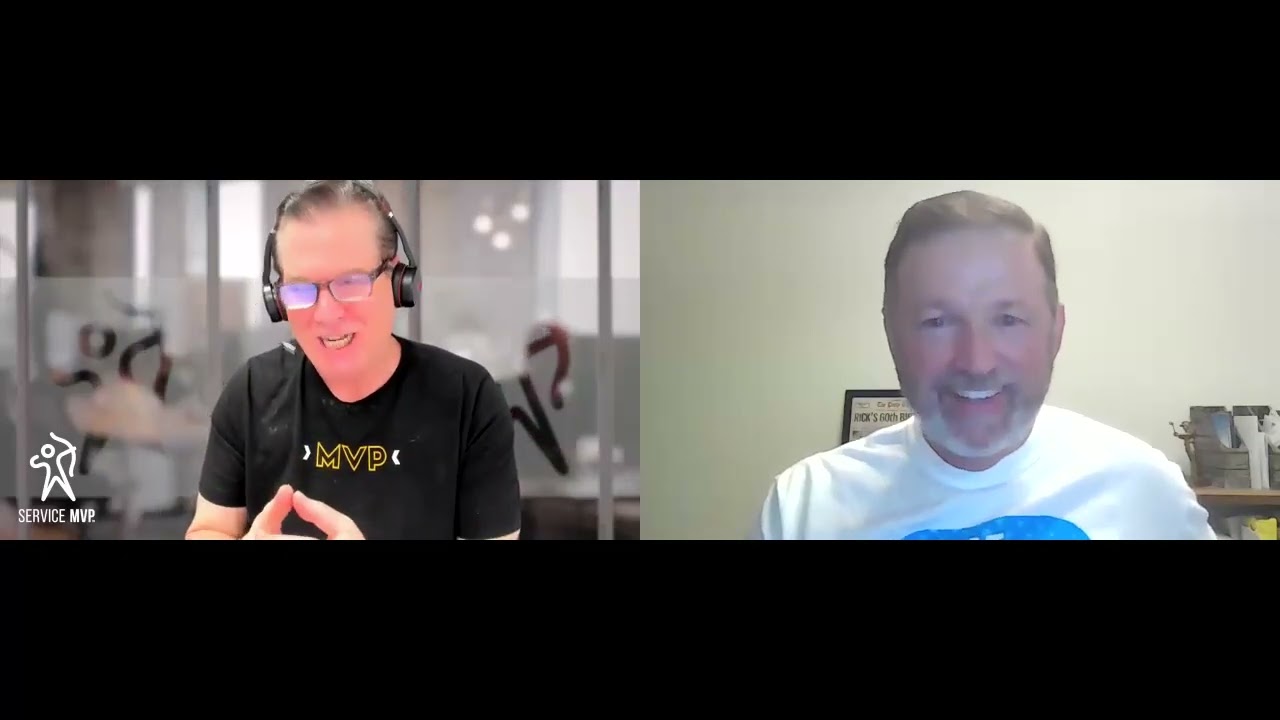
Michael Bears describes watching a technician draft options and correcting them before presentation at 4:29. Convert that historical example into a bounded checkpoint: the technician submits the relevant findings, authorized scope, assumptions, and option draft through an approved channel; the reviewer checks for factual support, omissions, and policy conflicts. Do not silently observe private communications, infer customer psychology, or reward a particular purchase outcome.
The recording next has the technician tell the customer that a project manager will call at 4:44. Make that notice a genuine choice. Explain who would join, why the escalation may help, what information would be shared, whether video or recording is proposed, and what happens if the customer declines. A technician should still be able to present accurate authorized information or follow a safe escalation path without manufacturing urgency.
At 4:54, the recording moves to a manager contacting the customer. Before that contact, confirm consent and the channel; during it, distinguish verified site facts from matters requiring a licensed or qualified person. Minimize home and customer data, avoid recording by default, restrict access, set a retention period, and preserve human correction. Log the reason for each correction so the next coaching session improves the standard instead of keeping the manager permanently inside every call.
Debrief evidence and choose one next behavior
After the call, compare the plan with the record. Useful evidence can include the technician's notes, photos the customer authorized, diagnostic readings, estimate versions, dispatch timestamps, customer questions, and the final disposition. Separate fact from interpretation. “The customer asked whether repair was possible” is evidence; “the customer was price-driven” is an inference that may hide a missing explanation or an unaffordable option.
Ask the technician what went well, where they became uncertain, and what support would have changed the result. Choose one or two behaviors that can be observed next time, such as restating the customer's concern before inspecting or explaining the difference between two scopes. Record the manager's commitment too—perhaps clearer pricing authority or faster technical escalation. Coaching past the owner bottleneck works only when improvement is not assigned entirely to the person in the truck.
Connect process to mission and handoffs
Amanda initially calls the third key process, then reframes it as mission: people are more likely to follow the steps when they understand the promise those steps protect. Translate the mission into observable handoffs. Dispatch passes complete service information. The technician documents findings and the customer's selection. Installation or repair receives the accepted scope. Billing matches the written terms. Follow-up knows what was promised and what remains open.
This keeps the coaching program from becoming a sales-only overlay. A missed handoff can create the same customer harm as a weak explanation inside the home. Review the full chain and assign ownership to each box. The technician should not be penalized for an error created by a schedule, price book, inventory record, or policy they do not control. Process gives the team a shared object to improve instead of turning every outcome into a judgment about one person's character.
“I think understanding process and how you want every call handled from start to finish.”
Amanda Triolo, episode timestamp 12:03
Put privacy governance before recording
The episode asks why a company would not keep records of what happens inside a home. That question cannot be answered by a coaching benefit alone. Audio, video, transcripts, names, addresses, household conditions, voices, and employee data can be sensitive. Notice and consent rules vary by jurisdiction and context. Before collection, qualified counsel should approve the lawful basis, exact notice, consent flow, prohibited locations, employee policy, vendor contract, and response to a revoked or refused consent.
Then minimize the data. The FTC's Start with Security guidance recommends identifying what data the business holds, keeping only what it needs, limiting access, disposing of data securely, and applying security practices to service providers. Use that general guidance to define the purpose, collect only what serves it, restrict access by role, secure storage and transfer, test deletion, set a short justified retention period, log access, and plan for incidents. Confirm the exact controls with qualified counsel and relevant authorities. Document what happens when a customer refuses recording, when an employee disputes a transcript, when a vendor exports data, and when a manager seeks access outside the coaching purpose. A privacy program needs those ordinary cases, not only a breach plan. This article is not legal advice; it is a stop sign against deploying a recorder first and asking governance questions later.
Keep AI claims in their 2023 context
Amanda and Joe predict that artificial intelligence will reshape call-by-call management over the following months. The recording does not provide an evaluation dataset, accuracy measure, bias test, security review, or current product evidence. Treat those statements as 2023 expectations. A modern vendor demo does not close the gap. Test transcription accuracy across real work conditions, document failure modes, and require a person with appropriate authority to review any summary or recommendation.
Do not let an automated tool infer emotion, intent, honesty, or personality and convert that inference into discipline, compensation, pricing, diagnosis, or customer pressure. Give employees and customers a way to see and correct material records where applicable. Start with low-risk assistance such as organizing approved notes, and compare it with a no-AI baseline. The success measure is better, fairer support and customer care—not the volume of data collected or the confidence of a generated score.
From the episode
Frequently asked questions
What is call-by-call coaching?
It is an individual support loop around a real customer interaction: establish the service standard, prepare for the call, make qualified help available during the work, review what occurred, and coach a small number of observable behaviors before the next call.
Does call-by-call coaching require recording customers?
No. A company can use technician check-ins, customer-approved notes, work artifacts, and post-call debriefs. Audio, video, transcription, or monitoring should be introduced only after qualified counsel confirms applicable notice and consent duties and the business defines purpose, access, security, retention, deletion, and human-review controls.
Should AI score technician or customer behavior automatically?
The episode's AI discussion is a 2023 prediction, not proof of present capability or fairness. Automated summaries can miss context and should not make employment, safety, diagnosis, pricing, or customer-treatment decisions without authorized human review and a way to correct the record.
Source trail
See the evidence behind this article
- Call-by-call management episode with Amanda Triolo
Primary video and complete public-caption source for the training, communication, process, support, and 2023 AI discussion.
- Free2Grow current about page
Current company and team context only. The page does not name Michael Bears, so the article uses Free2Grow only as his recording-time affiliation and does not conflate the 2023 service with the current AI platform.
- Call-by-call implementation with Michael Bears
Separate 2023 Service MVP recording and complete-caption source for the live option-review, disclosed escalation, and manager-contact checkpoint. Conversion, revenue, pricing, and current-product claims are excluded.
- Grasshopper Group
Current first-party source naming Amanda August as founder of Grasshopper Group and Grasshopper Heating & Cooling; used with the preserved recording-time Amanda Triolo identity.
- FTC Start with Security
Government business guidance supporting data minimization, role-based access, secure lifecycle handling, vendor oversight, and incident planning; it does not replace legal advice on recording consent.